
Letter to the President of the Republic: Monetary policy beyond the Covid crisis

By François Villeroy de Galhau
This Letter makes a first assessment of the economic impact of the Covid crisis and the responses of the authorities: an unprecedented shock; a rebound in 2021-22 much stronger than expected a year ago; the response adopted by French public authorities – a fiscal cushion, equivalent to over 8% of GDP in 2020; the genuine “financing bridge” provided by Eurosystem monetary policy – which helped to safeguard 2 million jobs.
Inside the euro area, after suffering a bigger shock during the first lockdown, the French economy has since being outperforming its peers; it should see cumulative growth of around 10% over the two years of recovery, even if the Delta variant were to lead to the reintroduction of certain public health restrictions. However, the vaccine remains the best weapon to support economic activity, especially at the global level. Overall, the response adopted by French public authorities appears to have been the right one. The fiscal cushion, equivalent to over 8% of GDP in 2020 and half as much again in 2021, has, in average terms, preserved household purchasing power and corporate finances. The priority now is not to spend more, but to focus instead on the quality of the transformation plans – on a digital and ecological level, and above all with regard to skills. The strength of the recovery will be determined more by the supply side, and notably by firms’ ability to recruit, than by demand. Of all the reforms France can make, the most crucial will be those that increase the size and quality of its labour supply: through training, a reduction in the underemployment of youth and of older workers, and an increase in incentives to work.
Eurosystem monetary policy, for its part, has helped to build a genuine “financing bridge”, particularly for SMEs: in contrast with previous crises, lending volumes have increased this time round, while interest rates have remained very low. Over the period 2020-22, the European Central Bank (ECB) will thus have helped to safeguard 2 million jobs.
Against this backdrop, we have engaged directly with the French public, to answer their questions on monetary policy. This initiative, entitled “La Banque de France à votre écoute” (“The Banque de France Listens”), is part of the ECB’s strategic review which was concluded on 8 July. But it is also driven by a democratic imperative, and by a concern for economic efficiency. A monetary policy that is better understood will be better transmitted, including to households and firms.
We have conducted a survey, held 17 events – including one in each region of France – and reached an online audience of 260,000 French people. We have explained a lot, but also learnt a lot. And as a result we have made a commitment, including at the level of the ECB, to communicate even more clearly.
It is with the public’s growing expectations in mind that we need to address the main issues for the future. Central banks cannot do everything; they have to make clear what they can, and therefore must do. The first challenge will of course be the emergence from the crisis. Past fears over the “disappearance of inflation” have given way to worries about its return. In Europe at least, the upward pressures on certain prices appear to be temporary, and inflation should come back towards 1.4% by 2023. As a result, once we have exited our exceptional anti-crisis programme (the pandemic emergency purchase programme or PEPP), the ECB will need to maintain a highly accommodative monetary policy using its powerful “quartet” of non-standard instruments. Our strategic review also clarifies that our 2% inflation target is symmetric, and can be temporarily exceeded.
Another challenge will be the problem of government debt, which the central bank can under no circumstances cancel. Reducing France’s debt will therefore require a combination of three instruments: time; growth, amplified by reforms; and last, greater efficiency in our government expenditure, which is the highest in the advanced world. Our country should aim for a stabilisation of government expenditure in real terms, combined with stable taxation, in order to give economic agents visibility and confidence.
Our strategic review also underlines our reinforced commitment to the climate: central banks cannot replace other public policies in this respect, including the need for a fair carbon price. But we intend to act in the name of our mandate, by studying the effects of climate change in our economic projections, by publicly disclosing our climate-risk exposure and above all that of our counterparties, and by gradually “decarbonising” our balance sheet via the renewal of our operations. The ECB, together with the Banque de France, will be a world pioneer.
The Treaty, our solid foundation, entrusts us with a primary mandate of price stability, to guarantee confidence in our currency and foster sustainable growth. However, monetary policy also takes account of social challenges: it indirectly supports employment and thereby reduces income inequalities. The ECB keeps a close eye on rises in financial asset prices, through its enhanced supervision of financial stability. But the strategic review conducted by the Eurosystem is also an invitation to harness the full power of the single market, the Banking Union and the Capital Markets Union. In the post-pandemic world, the “firefighters” who effectively tackled the Covid crisis will need to pass the baton to the architects, so that we can finally strengthen the European Economic Union alongside the European Monetary Union.
Download the PDF version of this document
Additional links
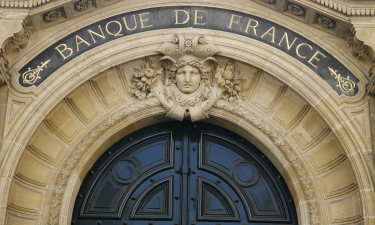
Banque de France Annual Report 2020
By François Villeroy de Galhau
The year 2020 will remain the year of the Covid shock. Threatened by the epidemic, our societies and their leaders reacted with determination: emergency measures were followed by stimulus packages. The Annual Report presents the actions taken by the Banque de France to continue to perform its missions, maintain confidence in the currency and ensure the smooth financing of the economy. For the 9,500 staff of the Banque de France, 2020 was a year of challenges but also a year of pride. The challenge was to switch massively to telework within two days in mid-March, and be present on all the “fronts” and in all the areas where we were expected. But pride because we did our duty in the service of the country and were recognised for it; and pride for having completed our “Ambitions 2020” transformation plan on time despite the crisis. I would like to express my warmest thanks to all the managers and staff of the Banque de France.
Banque de France Annual Report 2020 - Key figures
The health crisis triggered a massive supply and demand shock. Manufacturing output and the provision of services fell, consumption contracted, especially in services. As companies feared their cash position would deteriorate, their confidence fell sharply. What has the Banque de France to address the crisis ?
Letter to the President of the Republic: How can we reduce inflation?
By François Villeroy de Galhau
This Letter is naturally devoted to inflation, which has once again become the prime concern of French citizens and is at the heart of the central bank’s price stability mission. The rise in prices has accelerated significantly over the past year, reaching 6.5% in France at the end of June, a level that is clearly too high even though it remains, after that of Malta, the lowest in the euro area (which is 8.6% on average). But this rise has also changed in nature: it admittedly retains a strong imported component due to the increase in energy and commodity prices, which is being amplified by the shock of the Russian war in Ukraine. In recent months, inflation has nevertheless spread to a wide a range of goods and services, and has also become domestic: “core” inflation, excluding energy and food, has risen to 3.3% in France (and 3.7% in the euro area), well above our 2% target.
Updated on the 24th of September 2026